Which AI tool is right for the job?
With so many AI tools available today, choosing one can feel more complicated than it needs to be.
ChatGPT, Gemini, Claude, Perplexity, and Midjourney can all do impressive things, but they are not designed around the same strengths. Comparing them as if they were all competing for the same job misses the point.
The better question is simple:
Which AI tool is right for what you need to do?
ChatGPT for Writing and Communication
ChatGPT is particularly strong when the task involves language.
It can help generate content, rewrite existing text, transform information into different formats, and communicate across multiple languages. It is also useful for brainstorming, explaining ideas and working through a task conversationally.
That makes it a practical choice for everyday communication and content work.
Whether you are developing an article, refining a message, or trying to explain something more clearly, ChatGPT is built around understanding and generating natural language.
It is a versatile option when words are at the centre of the job.
Gemini for Multimodal Work
Gemini takes a different approach.
One of its major strengths is native multimodality. Rather than focusing only on text, Gemini is designed to work across different types of information. It also supports very large context windows, with some Gemini models offering context windows of more than one million tokens.
That can be particularly useful when working with large amounts of information.
Gemini also benefits from its close connection to Google’s ecosystem. For people already using Google services extensively, that integration can make it a natural fit for their workflow.
So, if your work involves large volumes of information, multiple types of content, or Google’s wider ecosystem, Gemini is worth considering.
Claude for Development
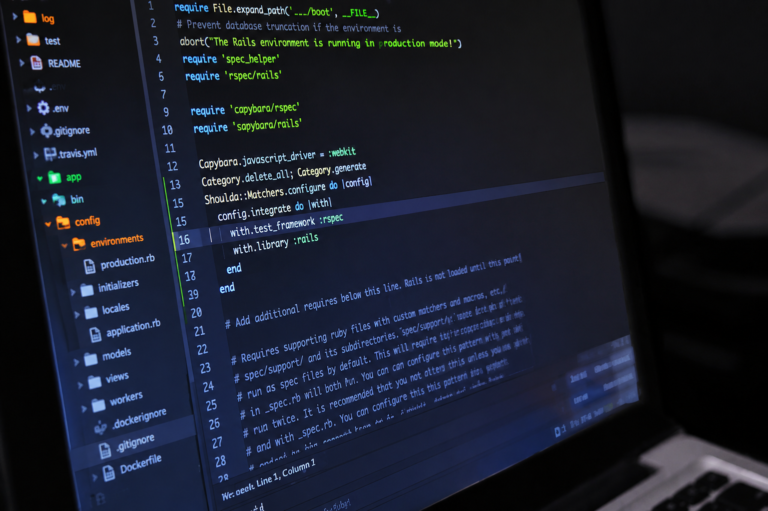
When the task is software development, Claude is a particularly strong option.
Claude Code is designed to help developers work with real codebases rather than simply generating isolated snippets. It can assist with understanding projects, making changes, investigating problems, and working through more involved coding tasks.
That makes it especially useful when development work involves context and multiple parts of a project.
As with any AI-generated code, however, developers still need to review and test the output. AI can accelerate development, but it does not replace engineering judgement.
Perplexity for Research
If your main goal is finding and understanding information, Perplexity takes a different approach.
It functions as a conversational search and research engine, combining real-time web access with source citations. This makes it useful when you want an answer while also being able to see where the information came from.
Another useful feature is its handling of follow-up questions. You can continue a research conversation without having to start from the beginning each time.
Perplexity can also work with different underlying AI models, including models from providers such as OpenAI and Anthropic. That gives users more flexibility when approaching different research tasks.
It is still important to check the sources, especially for information that matters. Citations make verification easier, but they do not make an answer automatically correct.
You Do Not Need One AI for Everything
This is where choosing AI tools becomes much easier.
You do not have to pick one platform and use it for every task.
A content team might use ChatGPT to develop and refine written content, Perplexity to research a subject, and Midjourney to explore visual concepts.
A developer might turn to Claude for coding while using another tool for research or communication.
Someone working with large documents and multiple types of information might find Gemini better suited to the task.
There is nothing inconsistent about using several tools.
It is simply a matter of using the right tool for the right job.
So, Which AI Tool Should You Choose?
Think about what you actually need.
Working with language, content, or communication? ChatGPT is a strong choice.
Working with multiple types of information or very large context windows? Gemini is worth considering.
Developing software or working with codebases? Claude is a strong option.
Researching information and wanting real-time sources? Perplexity is built for that purpose.
Creating visually striking images? Midjourney is the more specialised choice.
There is no need to declare one of these tools the overall winner.
AI is developing too quickly for that conclusion to remain useful for long. More importantly, the “best” tool depends on the person using it and the problem they are trying to solve.
The smarter approach is to look at the task first.
Once you know what you need, choosing the right AI tool becomes much easier.
The goal is not to find the AI that does everything.
It is to find the AI that does your job well.